

.svg)


How Many Hours a Day Can You Wear a Prosthetic Limb?
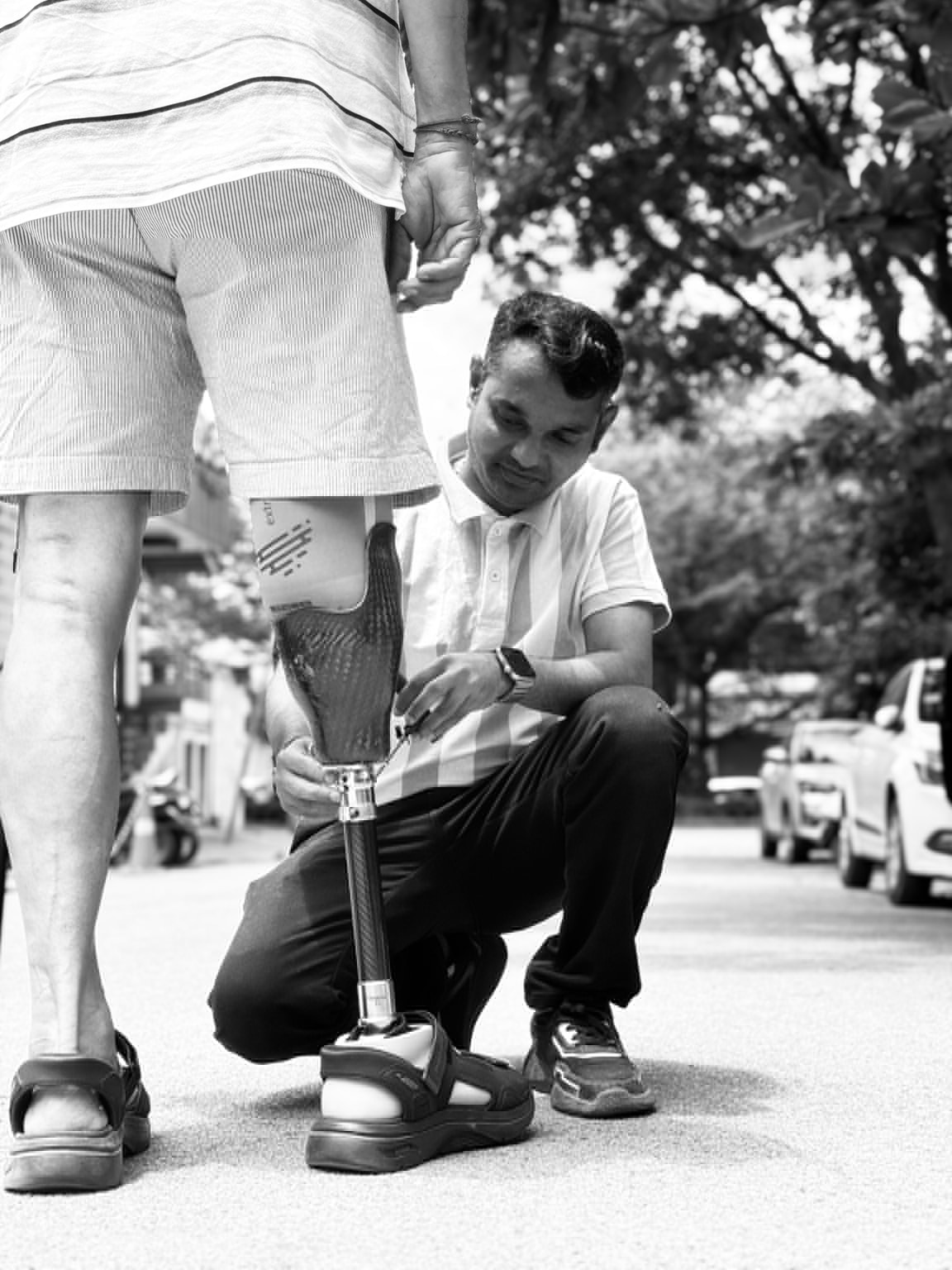
One of the most common questions after a first fitting: how long can I wear my device during the day?
The honest answer is: it depends, and it builds over time. There's no fixed number of hours that applies to every amputee. What matters is starting at the right level for your body and increasing gradually, in a way that your skin and residual limb can tolerate.
Here's what to expect.
How Long Can I Wear My Prosthesis Each Day?
In the early weeks after your first fitting, wear time is short. Often 1 to 2 hours at a time, with breaks in between. This isn't because the device isn't working. It's because your skin and residual limb need time to adapt to the pressure, friction, and load of a prosthesis.
Think of it like breaking in a new pair of shoes, except the consequences of going too fast are more significant.
By week 6, most patients are comfortably wearing their device for 4 to 6 hours a day, in blocks. By 3 months, many are wearing it for most of their waking hours (8 to 10 hours) with short breaks as needed.
That said, these are general patterns, not guarantees. According to research published on PubMed, Your timeline depends on:
- Skin condition: Some residual limbs are more sensitive, particularly if there's scar tissue or previous skin breakdown
- Fit: A well-fitted socket accelerates tolerance. A poorly fitted one slows it and may cause problems
- Activity level: Higher activity means more load on the skin; wear time builds more gradually
- Limb volume: Your limb changes shape throughout the day. Managing this with the right sock thickness is part of daily prosthetic use
What to watch for
Redness that fades within 20 minutes of removing the prosthesis is normal in the early weeks. Redness that persists for longer than 20 minutes, blistering, skin breakdown, or persistent pain is a sign to stop wearing the device and contact your prosthetist.
Can I Shower With My Prosthetic Limb?
It depends on the device.
Most standard prostheses, including the majority of lower limb devices and body-powered upper limb devices, are not designed for water exposure. Getting them wet can damage the components, affect the fit, and shorten the lifespan of the device. The short answer: if you're not sure, take it off before the shower.
Waterproof prostheses are available, designed specifically for use in wet environments: showers, pools, the beach. These use corrosion-resistant materials and sealed components. If water activity is a regular part of your life, this is a conversation worth having with your prosthetist at your assessment.
For most patients, the practical approach is:
- Remove the prosthesis before showering
- Use a shower chair or non-slip mat as needed for stability
- Allow the residual limb to breathe and the skin to be checked during this time
If you're unsure whether your specific device is water-safe, ask before testing it. Component damage from water exposure isn't always immediately visible.
Can I Sleep With My Prosthetic Limb?
In most cases, no.
Wearing a prosthesis overnight keeps the residual limb under constant pressure. Skin needs time without compression to maintain its health. The residual limb also changes shape overnight as swelling reduces, which affects fit.
For lower limb amputees, sleeping without the prosthesis is standard. If you're concerned about safety at night (moving around, getting to the bathroom, etc), there are adaptive strategies and equipment you can ask your prosthetist about for more information.
Liner care overnight matters too. If you use a silicone liner, this should be removed at night, cleaned, and left to air. Liners that stay on continuously break down faster and can cause skin issues.
There are some exceptions. Certain above-elbow amputees may be advised by their clinical team to wear a positioning device (not the full prosthesis) overnight to prevent contracture, as detailed here by physiopedia.
Building Up Wear Time: A Practical Guide
Week 1–2: Short blocks, frequent breaks
Wear the prosthesis for 1–2 hours, then remove it and check your skin. Look for any areas of redness or irritation. If skin looks fine after 20 minutes, you can put it back on. If not, give it more time.
Week 3–4: Extending gradually
If your skin is tolerating the device well, increase wear time in 30-minute increments. The goal by the end of week 4 is typically 3–4 hours of total wear per day, in blocks.
Month 2–3: Building toward full-day use
Most patients reach comfortable, sustained wear for around 6 to 8 hours. Activity increases alongside wear time, which is why rehabilitation runs in parallel with all of this.
Ongoing: Listening to your body
Even experienced prosthetic users have days where the fit feels off. Limb volume can change with hydration, activity, and health. Managing sock thickness, taking breaks when needed, and keeping up with follow-up appointments is part of using a prosthesis long-term. It doesn't stop once you've reached full wear time.
Our Approach at Rise Bionics
At Rise Bionics, we don't hand you a device and leave you to figure it out — we give you a structured plan for building up tolerance, a clear list of what to watch for, and access to our team when something doesn't feel right.
Our online rehab program for recent amputees, First Steps, includes regular check-ins precisely because the first months of prosthetic use are where fit, skin tolerance, and confidence are all being developed at the same time.
Learn about our rehabilitation programme →
Frequently Asked Questions
What happens if I wear my prosthesis for too long too soon?
Skin breakdown can occur like blisters, sores, or open wounds on the residual limb. These aren't just painful; they mean time off the device while the skin heals, which sets back your overall progress.
How do I know if my prosthesis fits properly?
A well-fitting prosthesis feels secure, neither tight nor loose. There should be no pistoning (the leg moving up and down as you walk), no persistent pressure points, and no skin breakdown after use. If any of these are present, contact your prosthetist.
Can I go swimming with a prosthetic limb?
With a standard prosthesis, no. With a waterproof device, yes. If swimming is important to you, raise it at your first assessment so the right device or secondary device can be planned for.
Ask our team about waterproof options →
My residual limb changes size throughout the day. Is that normal?
Yes. Limb volume fluctuates with activity, heat, and fluid levels. This is managed with prosthetic socks: adding or removing layers to maintain a consistent fit throughout the day. Your clinical team will show you how to manage this. It becomes second nature quickly.
Should I wear my prosthesis around the house?
Yes, if you're building up wear time. Consistency matters more than duration in the early weeks. The more regularly you wear the device (within safe limits), the faster your skin and body adapt.

