


Can an Amputee Live Independently?
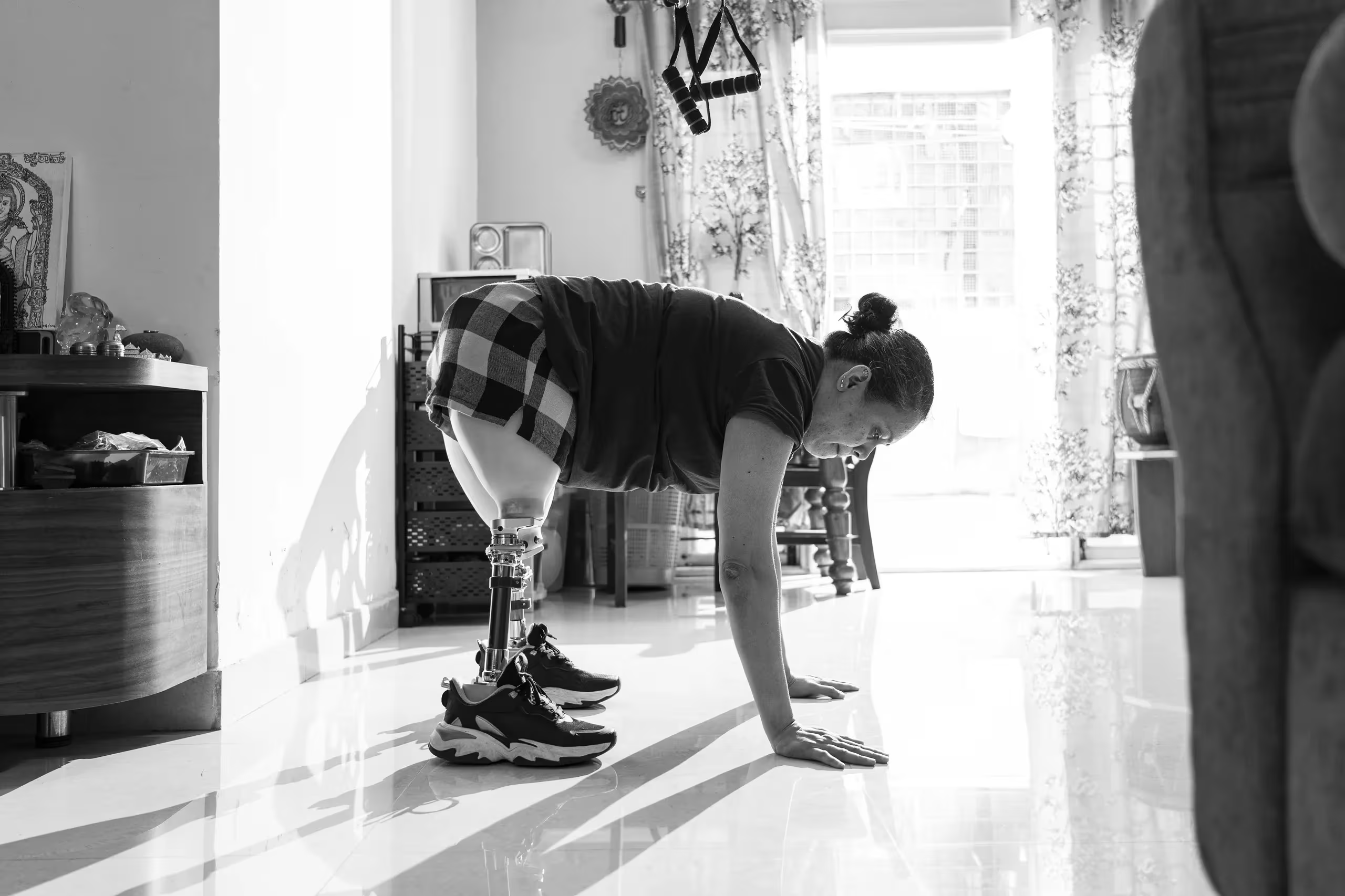
When you are caring for someone who has just had an amputation, it is natural to wonder: will they always need this much help?
The honest answer, for most amputees, is no.
Independence after amputation is a realistic goal.
It does not happen overnight, and it looks different for each person.
But with the right rehabilitation and the right device, most amputees go on to manage their daily lives without needing someone beside them at every step.
This guide is for caregivers who want to understand what independence looks like after amputation, how to support it, and what to expect along the way.
What Independence Actually Looks Like
Independence does not mean doing everything perfectly or without any adaptations. It means being able to manage daily life without needing another person present to help.
For a lower limb amputee, that might look like:
- Walking around the home and outdoors without support
- Managing stairs, slopes, and uneven ground
- Cooking, cleaning, and personal care
- Getting in and out of a vehicle
- Returning to work
- Putting on and taking off the prosthesis independently
For an upper limb amputee, it might look like:
- Managing daily tasks with one hand or with a prosthetic device
- Personal hygiene and dressing
- Eating, writing, and holding objects
- Returning to work and everyday activities
These are achievable goals for the majority of amputees. They take time and consistent rehabilitation to reach, but they are the norm, not the exception.
How Long Does It Take?
There is no single timeline that applies to everyone. It depends on the level of amputation, the person's age and overall health, and how actively they engage with rehabilitation.
As a general guide:
In the first few weeks after amputation, significant help is expected and completely normal. This is not a sign of how things will always be. It is simply where recovery begins.
By three to six months, with consistent rehabilitation, most amputees are managing the majority of daily tasks on their own or with minimal support.
By twelve months, many people are back to work, driving, and participating in activities they enjoyed before.
Progress is not always steady. There will be harder days and easier ones. A difficult week does not erase the progress that came before it.
According to the Amputee Coalition, most amputees who receive structured rehabilitation go on to lead full, active, and independent lives. The quality of rehabilitation in the early months has a significant impact on long-term outcomes.
What Helps Someone Get There
A good rehabilitation program
This is the most important factor. A structured program that starts early, builds progressively, and covers real-life activities, not just clinical exercises, makes the biggest difference to how independent someone becomes.
At Rise Bionics, we run First Steps, an online rehabilitation program designed to support amputees and caregivers in the weeks right after amputation. The program covers pain management, nutrition, movement and getting back to life.
A well-fitted device
A prosthesis that does not fit well is one that does not get worn. And a prosthesis that is not worn does not build independence. Fit is the foundation of everything else.
Consistent practice
Independence is built through repetition. Doing things imperfectly and repeatedly is how the body learns. This is true for everyone learning something new, and it is especially true in rehabilitation after amputation.
The caregiver's approach
This one is often underestimated. How a caregiver shows up has a direct impact on how quickly someone builds independence. More on this below.
Your Role as a Caregiver
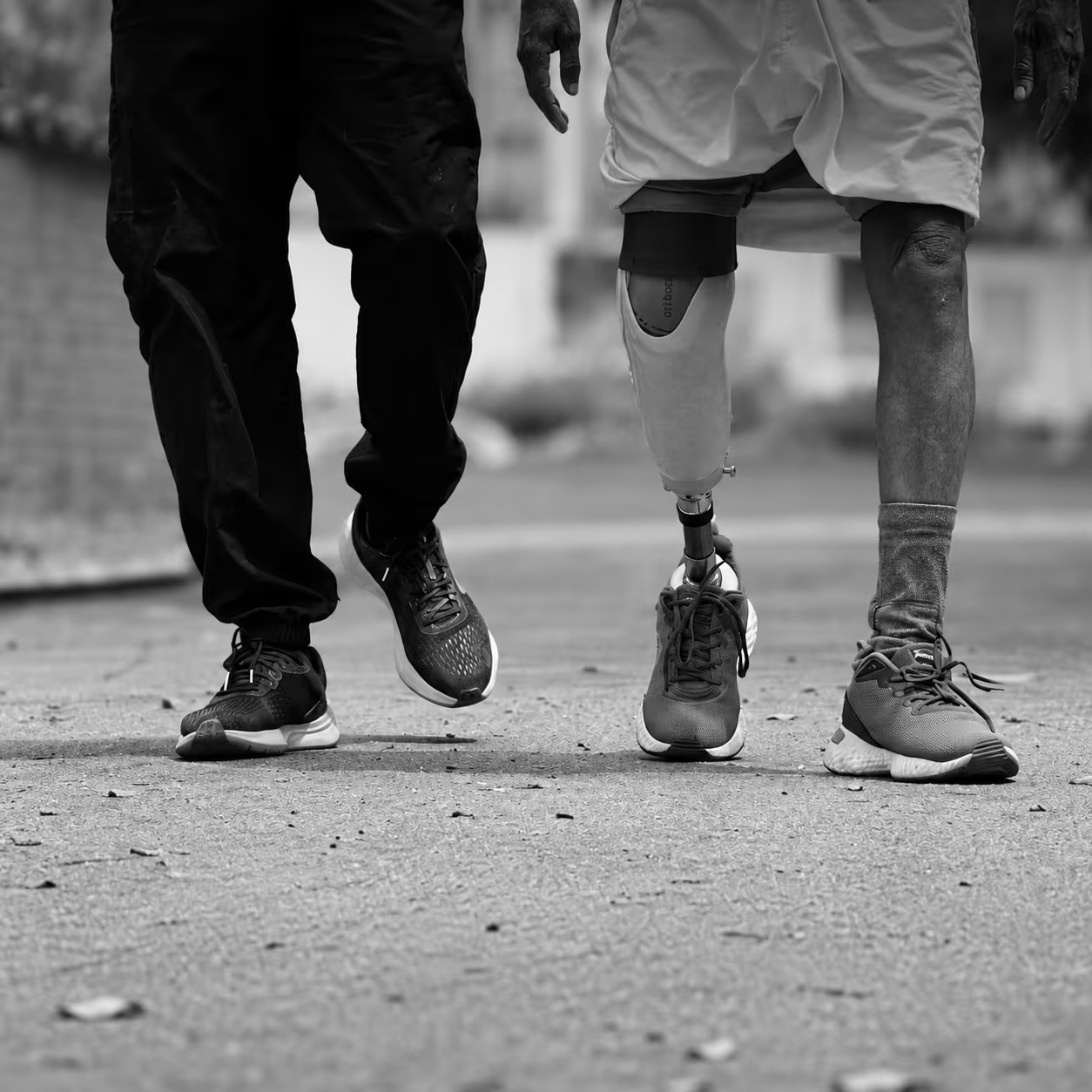
The most important thing to understand is this: helping with everything, even out of love, can slow the process of becoming independent.
When you do something for someone that they could attempt themselves, you take away a practice opportunity. Over time, this can quietly communicate that you do not think they are capable. That is the opposite of what you intend, but it is what it can feel like.
This does not mean stepping back and doing nothing. It means being thoughtful about when to help and when to let them try.
Ask before stepping in. "Would you like a hand with that?" gives the person a choice. It keeps their sense of control intact at a time when a lot feels out of their hands.
Let them struggle a little. Struggling with a task is not a sign that something is wrong. It is how the brain and body figure things out. Stay nearby, stay calm, and let them work through it.
Celebrate the small things specifically. "You just did that without holding on" lands differently than "well done." Specific recognition tells the person you are paying attention and that the small wins count.
Keep normal life going. Conversations, routines, humour, everyday frustrations. All of this is appropriate and welcome. Treating someone as permanently fragile is its own kind of limitation.
When More Support Is Needed Long Term
For some people, full independence is not the realistic end goal. Older patients, those with other health conditions, or those with bilateral or high-level amputations may need ongoing support with certain tasks.
This is not a failure. It is just a different version of the goal: maximum independence within what is possible for that individual.
Even in these cases, the starting point should always be: what can this person do, and how do we build from there? Assistance should fill the gaps, not replace what someone can manage themselves.
Research published in Disability and Rehabilitation shows that amputees who maintain an active role in their own care and daily tasks report higher quality of life and better long-term outcomes than those who rely heavily on caregiver support.
The evidence points consistently in the same direction: doing more, not less, leads to better outcomes.
Our Approach at Rise Bionics
Wearing a prosthesis is one of the biggest factors in how quickly someone regains independence. The right device gives a person the ability to move, practice, and build confidence in daily life. Without it, progress slows significantly.
What makes the difference is a device that suits the individual. Not just their body, but their goals, needs, and daily activities. A device that fits well and works for real life is one that actually gets worn, and that is where independence is built.
At Rise Bionics, we make fully custom devices across a wide range of needs and budgets.
Every device is custom-made, using 3D scanning and digital fabrication for a precise fit. Whether someone needs a basic functional device to get back to daily life or something more specialised for higher-level activity like sports, we work with each patient to find the right solution for them
Book a consultation with our team →
Frequently Asked Questions
My amputee family member says they do not need help but I can see they are struggling. What do I do?
Follow their lead where it is safe to do so. The desire to manage independently is one of the strongest drivers of rehabilitation success. If something feels genuinely unsafe, speak to the clinical team rather than stepping in yourself. They can advise on how to manage specific situations without taking over.
How do I know if the level of help I am giving is too much?
A useful question to ask yourself is: could they attempt this without me, even if it takes longer or looks harder? If yes, step back and let them try. If you are unsure, raise it with the rehabilitation team. They can give you specific guidance based on where the person is in their recovery.
What if they become dependent on my help and stop trying?
This is a real risk, and it is worth addressing early. If you notice the person is relying on you for tasks they were previously managing, speak to the clinical team. It may be a sign that rehabilitation needs to be adjusted, or that a conversation about goals and expectations is needed.
Is it normal to still be providing a lot of help six months after amputation?
Some level of support at six months is normal depending on the situation. But if you are still providing significant daily assistance, it is worth discussing with the clinical team. There may be something in the rehabilitation plan, the device fit, or the home environment that can be adjusted. It is not a sign that things will always be this way.
I find it hard to step back even when I know I should. Is that normal?
Completely. Watching someone you love struggle is genuinely difficult, and the instinct to help is strong. Many caregivers find it useful to talk to a counsellor or a caregiver support group, not because something is wrong, but because this role is hard and having support yourself makes you better at supporting someone else.

