


Can You Wear Different Footwear With a Prosthetic Leg?
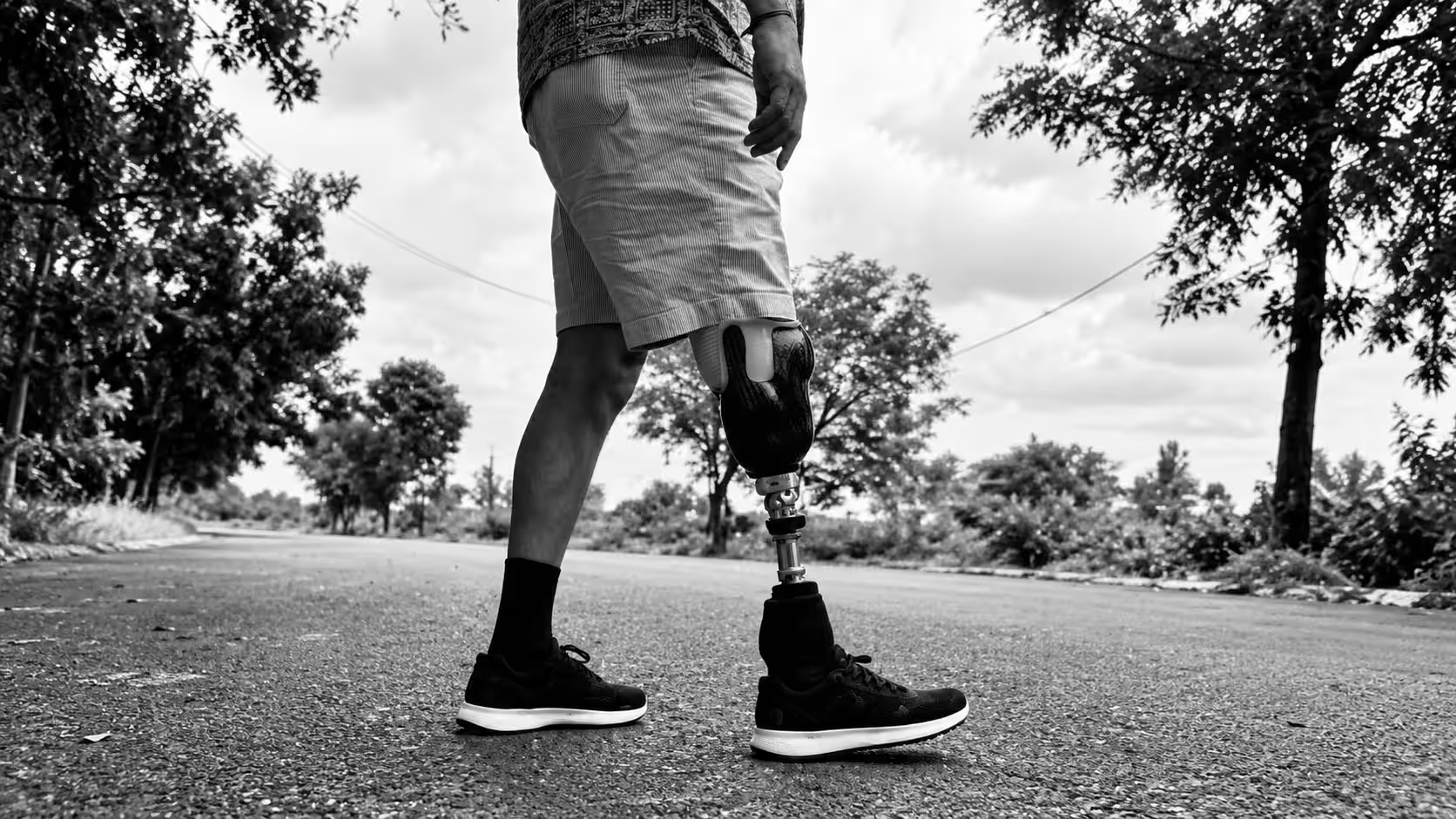
This question comes up at almost every fitting consultation: can I wear my normal shoes? What about sandals? What about heels?
The short answer is: some footwear, yes. Any footwear, no. And the specifics matter, because the wrong shoe with a prosthetic foot isn't just a comfort issue, it's a biomechanical one.
Here's what to know.
Why Footwear Matters More With a Prosthetic Limb
Your prosthetic foot is aligned by your prosthetist for a specific heel height and attachment angle — both calibrated to match the footwear you'll be wearing most of the time.
When the heel height of your shoe matches the prosthesis alignment, your weight is distributed evenly, your gait is stable, and the device performs the way it was designed to.
When the heel height doesn't match your alignment changes. This affects your posture, your gait, and over time, can cause discomfort in your back, hip, or intact limb.
This is why footwear isn't just a personal choice when you have a prosthetic lower limb. It's a clinical consideration.
There are exceptions, if a patient is using microprocessor foot ,the foot adapts to different surfaces by automatically changing its angle.
What You Can Wear
Shoes with a slight heel (1-2cm)
According to a patient leaflet by NHS Dorset: For most prosthetic feet, low-heeled trainers or sneakers (≈ 1–2 cm heel) are the standard. Your prosthesis is aligned to the specific shoe you wear, so stick to shoes with a similar heel height unless you have a heel-height adjustable foot. Avoid truly flat shoes (ballet flats, canvas shoes) and high heels, as both can throw off your alignment.
Most prosthetic feet are aligned for ~10 mm (1 cm) heel by default, so a shoe with 1–2 cm heel is essentially the expected range
Avoid flat shoes or those with a total heel height greater than 2.5 cm/1 inch.
Grip and sole thickness matter too; thin-soled or very flexible shoes may feel less stable than a shoe with a structured sole.
Sandals and open-toed shoes
This depends on the cosmetic cover on your prosthetic foot and the style of sandal. Choose sandals with secure ankle straps or adjustable closures and a heel height that matches your everyday shoes.
What to Be Careful About
High heels
High heels (above 4–5cm) are challenging with most standard prosthetic feet. The change in heel height significantly shifts your alignment and centre of gravity.
Some prosthetic feet are designed with an adjustable heel height, allowing for switching between flat and higher-heeled footwear, but this is device-specific and needs to be discussed with your clinical team.
If wearing heels is important to you, raise it before your device is fitted. It can influence component selection.
Switching frequently between very different heel heights
Going from flat shoes to high heels and back regularly is difficult to manage biomechanically with most prosthetic feet.
It's not impossible, but it requires an adjustable foot, and it means checking alignment each time.
However, if you are using a microprocessor foot, it automatically adjusts and alignment by a professional each time is not needed.
Worn-out soles
The condition of the sole of your shoe affects the performance of your prosthetic foot.
Worn-out soles change the angle and load distribution in ways that affect gait and comfort.
Practical Tips for Footwear With a Prosthetic Limb
Buy both shoes, not just one. Some adaptive footwear retailers offer mismatched sizing if that helps suit your prosthetic device better.
Keep heel heights consistent day to day. Switching daily creates alignment inconsistency that your body has to compensate for.
Tell your prosthetist before you change footwear significantly. If you've been wearing trainers and decide to start wearing heels regularly, this is a clinical conversation, not just a style decision. Your foot may need to be adjusted.
Break in new shoes gradually, just like the prosthesis. New shoes can change the feel of your device significantly. Introduce new footwear gradually, with attention to how your body responds.
Our Approach at Rise Bionics
Footwear is part of the conversation from the start. At your assessment, we ask what shoes you typically wear, because it directly influences how we set up your prosthetic foot. If you have specific footwear goals (returning to heels, wearing sandals regularly, running in trainers), we factor those in.
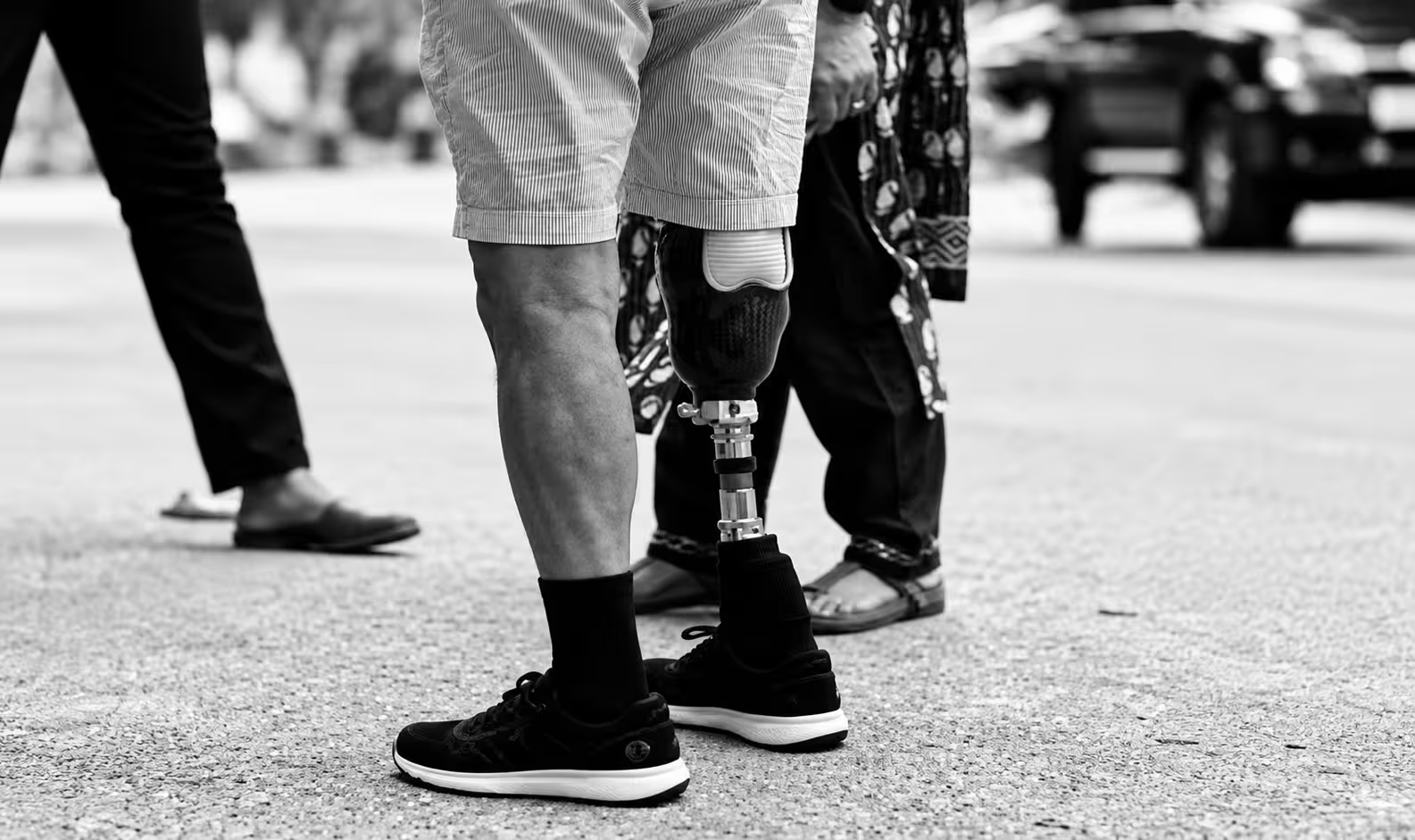
If your lifestyle or footwear changes after fitting, our team is here for follow-up adjustments.
Frequently Asked Questions
Can I wear the same shoe size on both feet?
Usually, yes. Some people notice small differences over time, but in most cases your prosthetist can recommend the right fit for both feet.
What happens if I wear shoes with the wrong heel height?
Your prosthesis may no longer be properly aligned, making walking less comfortable and less stable. If you've changed the type of shoes you wear regularly, let your prosthetist know so your device can be reviewed.
Can I wear heels with a prosthetic leg?
Yes, in some cases. Certain prosthetic feet are designed to accommodate different heel heights. If heels are important to you, tell us during your assessment so we can plan for them.
Do I need special shoes?
Not usually. Most people can wear everyday footwear that provides good support and has a consistent heel height. If adaptive footwear would benefit you, we'll guide you through your options.

