


Can I Run, Swim, Cycle, or Go to the Gym
One of the first things many people want to know after an amputation is whether they will be able to get back to the activities they love.
The answer, for most amputees, is yes.
Not immediately. Not without work. But returning to running, swimming, cycling, the gym, and sport is a realistic goal for the majority of people who have the right device and the right rehabilitation support behind them.
Here is what to expect for each activity.
Running
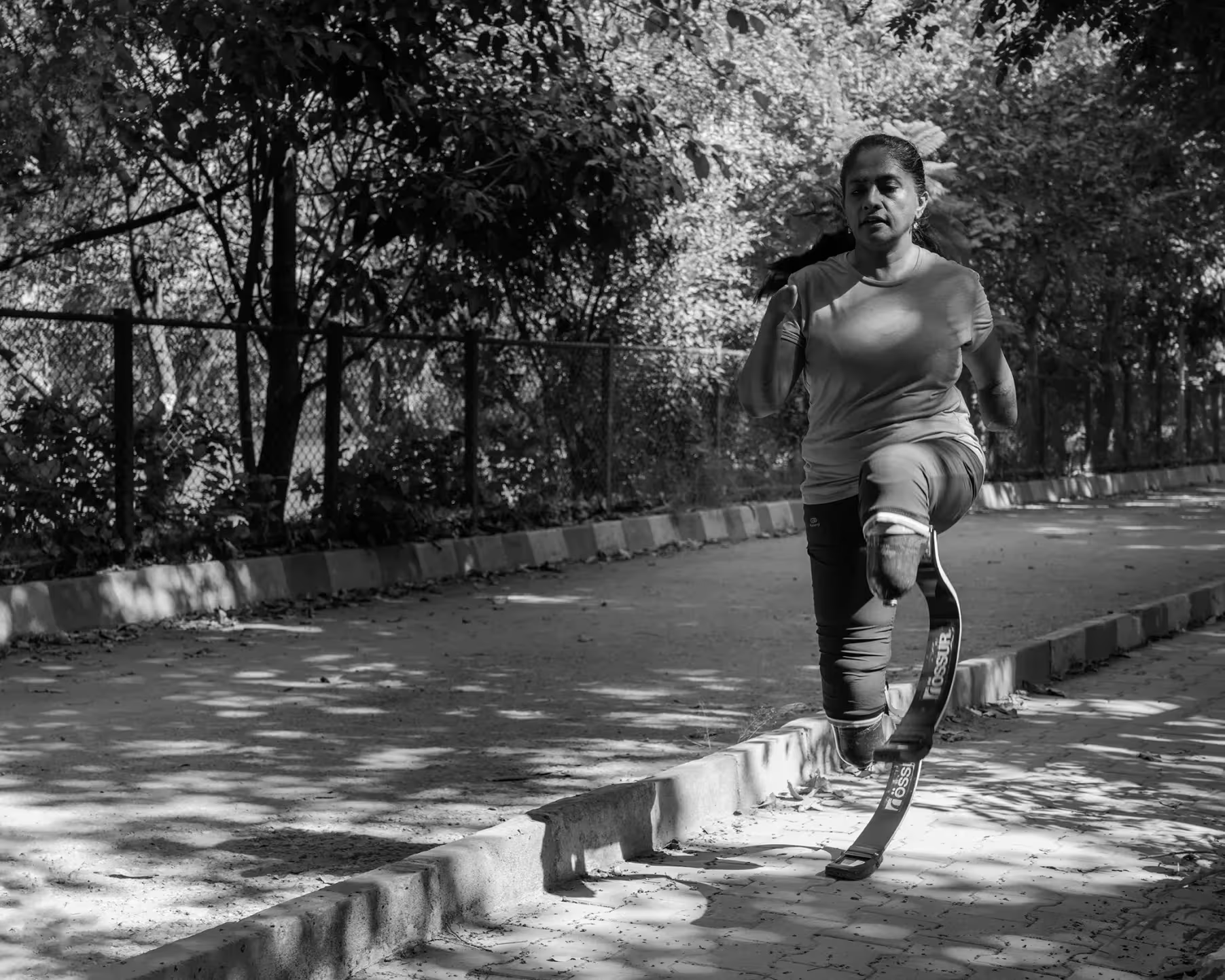
Running after amputation is very much possible, and it is one of the most common goals we hear from patients at Rise Bionics.
For lower limb amputees, returning to running typically happens in stages.
The first goal is walking confidently with a functional prosthesis. Once that is established and your rehabilitation has progressed, the focus shifts to running-specific training.
This usually begins around three to six months after fitting your definitive prosthesis, though the timeline varies by individual.
Running with a standard prosthetic foot is possible for many below-knee amputees. For those who want to run regularly or at higher intensity, a running-specific prosthesis is usually recommended. The most common is a carbon-fibre running blade, which is designed to store and release energy with each stride in a way that a standard prosthetic foot cannot replicate.
Above-knee amputees can also return to running, though the process is more involved and typically takes longer. The device, the rehabilitation programme, and the individual's strength and fitness all play a significant role in how far and how fast that progression goes.
At Rise Bionics, we design and fit custom running prostheses built around your anatomy, your goals, and your running style. If getting back to running is important to you, that conversation starts at your very first assessment.
According to the Amputee Coalition, the majority of amputees who engage in structured rehabilitation go on to participate in recreational and competitive sport, including running.
Swimming
Swimming is one of the most accessible activities for amputees and is often recommended early in the recovery process because it is low impact and gentle on the residual limb.
Most standard prostheses are not designed for water. They can be damaged by prolonged exposure to chlorine or salt water. For most swimmers, the prosthesis is removed before entering the water.
Many amputees swim without their prosthesis entirely, and do so very effectively. The body adapts quickly to the change in balance and propulsion, and swimming technique adjusts naturally over time.
If wearing a device in the water is important to you, waterproof prosthetic devices are available. These are made from corrosion-resistant materials and sealed components designed specifically for wet environments.
At Rise Bionics, we can design and fit a waterproof device if this is part of your goals.
Swimming can often begin earlier than other sports, sometimes within weeks of the wound healing and with your clinical team's approval. It is a good option for staying active during the earlier stages of recovery when higher-impact activity is not yet appropriate.
Cycling
Cycling is another activity that many amputees return to, and often sooner than they expect.
For below-knee amputees, cycling with a standard prosthetic limb is achievable for most people. The prosthesis provides a stable platform for pedalling, and most people adapt their technique relatively quickly. Clip-in pedals or toe cages can help with control and efficiency.
For above-knee amputees, cycling is still very much possible but requires more adaptation. The prosthetic knee needs to flex through the pedal stroke, which takes practice and may require some adjustment to the device setup.
Hand cyclists and those with upper limb amputations also return to cycling with adapted equipment. Handcycles and modified bikes allow people with a wide range of amputation types to cycle independently.
If competitive or long-distance cycling is your goal, a cycling-specific prosthesis or adapted equipment may be worth discussing at your assessment. Our team can advise on what is available and what suits your situation.
The Gym
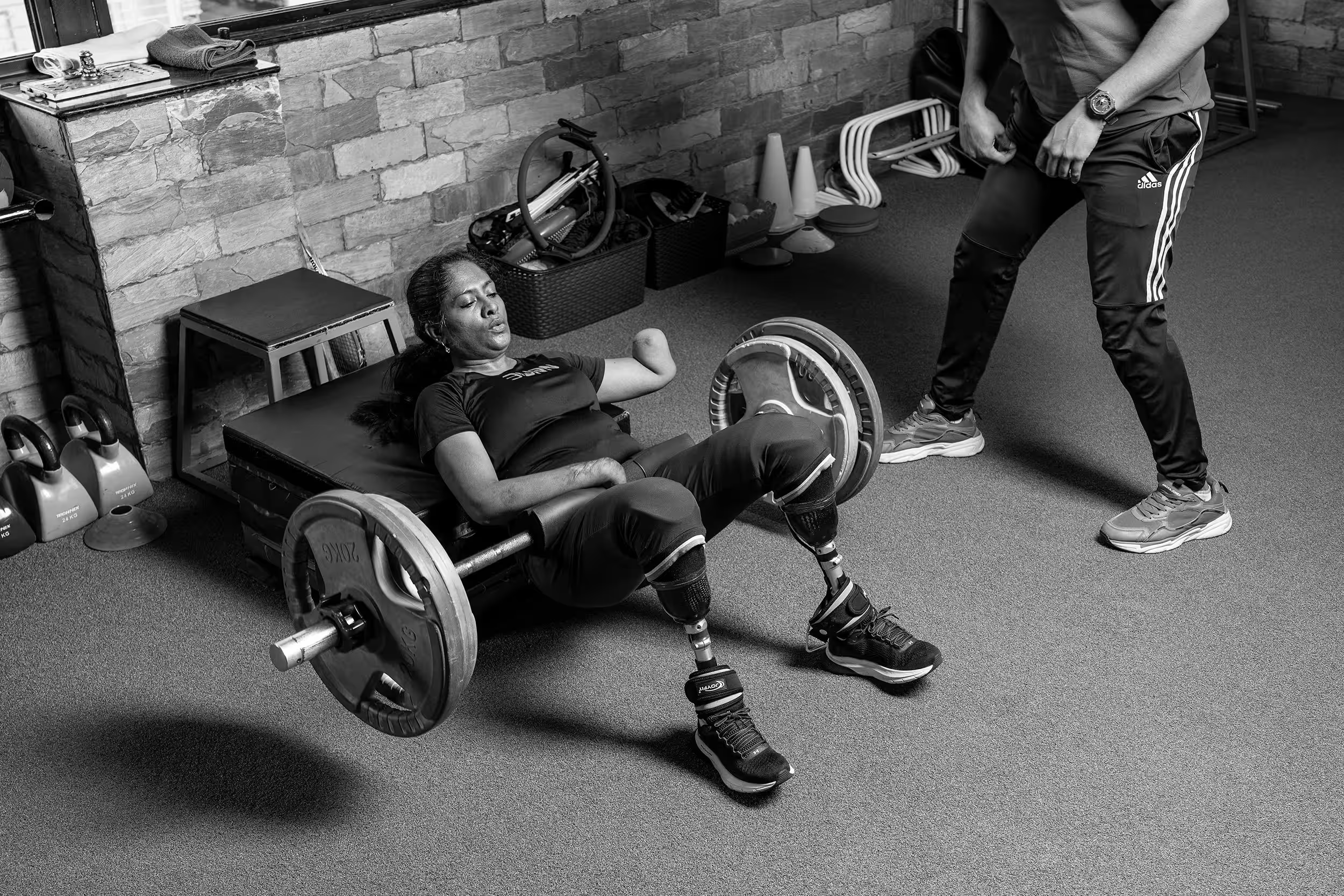
Returning to the gym after amputation is very common, and for good reason. Strength training plays a direct role in how well someone uses their prosthesis, how quickly they build confidence, and how much they can do in daily life.
Most gym activities are achievable with a prosthetic limb, though some require adaptation in technique or equipment setup. Seated exercises, upper body training, and machine-based workouts are usually the easiest to return to first. Standing exercises, free weights, and anything that requires balance on an uneven surface take more time and practice.
A few practical things to know:
Wear time in the gym builds gradually, the same as it does in daily life. Start with shorter sessions and build up as your body adapts to the demands of training with the prosthesis.
Some exercises are easier without the prosthesis, particularly floor-based work. You will figure out what works best for you over time, often with input from your physiotherapist.
Skin checks after gym sessions matter. Training increases sweat and friction inside the socket, which can cause skin irritation more quickly than everyday use. Monitor your residual limb after each session, especially in the early weeks.
What All of These Have in Common
Whether your goal is running, swimming, cycling, or the gym, a few things apply across the board.
Start with your everyday device and build a base. Activity-specific prostheses come into their own once you have built confidence and strength on your standard device. Getting that foundation right first makes everything else faster and safer.
Talk to your clinical team before starting any new activity. Not because it is likely to be a problem, but because the right preparation makes a real difference. Your prosthetist may need to adjust your device setup, and your physiotherapist can help you build the specific strength and movement patterns needed for each sport.
Progress is not always linear. There will be sessions that feel great and sessions that feel harder than expected. Both are normal. The direction is forward, even when individual days do not feel that way.
Research published in Prosthetics and Orthotics International consistently shows that amputees who return to physical activity report significantly higher quality of life, better mental health outcomes, and stronger long-term rehabilitation results than those who do not. Staying active is not just about fitness. It is part of recovery.
Our Approach at Rise Bionics

We make custom activity-specific prostheses for running, swimming, cycling, and sport, designed around your body, your goals, and your budget.
Our customers have gone on to run races, compete in hyrox and devil’s circuit, get back to the gym and much more with our devices.
If you have a specific activity in mind, tell us at your first consultation. It shapes the device we recommend.
Book a consultation at Rise Bionics →
Frequently Asked Questions
How soon after amputation can I start swimming?
Swimming is often one of the first activities people return to because it is low impact and does not require the prosthesis. Most people can begin once the wound has fully healed and with their clinical team's approval, sometimes as early as six to eight weeks post-surgery. Always check with your team before getting in the water.
Do I need a special prosthesis to run?
For recreational jogging and light running, many below-knee amputees manage with their standard prosthetic foot. For regular or higher-intensity running, a carbon-fibre running blade is usually recommended. It is designed specifically for the demands of running in a way a standard foot is not.
Can I cycle if I have an above-knee amputation?
Yes. It takes more adaptation than for below-knee amputees, but above-knee amputees cycle regularly and successfully. The setup of the prosthetic knee and the bike may need some adjustment, and your prosthetist can advise on what works best for your device.
Will I need a separate prosthesis for sport and daily life?
For most people, yes. A sports-specific prosthesis is designed for activity, not everyday use. Most active amputees use their standard device for daily life and switch to their activity prosthesis for training or competition. This is completely normal and something we plan for from the start.
Can upper limb amputees return to sport?
Yes. Upper limb amputees return to swimming, cycling, gym training, and a wide range of sports. The approach depends on the level of amputation and the activity. Some sports are done without the prosthesis, others with a task-specific device. Our team can advise on what is possible for your specific situation. Get in touch with our team →
What if my goal is to compete, not just participate?
We work with patients at all levels, from those who want to get back to a weekend swim to those training for competitive events. If competition is your goal, tell us early. It shapes the device selection and the rehabilitation programme from the start.

