


Scoliosis and Spinal Bracing
If you or your child has recently been diagnosed with scoliosis, one of the first questions is usually: will the spine become straight?
The honest answer is: it depends on age.
For children and adolescents whose spines are still growing, bracing can do more than just support.
Started early and worn consistently, it can actively influence how the spine develops and, in many cases, prevent the curve from getting worse.
For some younger patients, it can reduce the curve over time.
For adults, the spine has finished growing. Bracing in adulthood is not about correction. It is about support, pain relief, and slowing further progression.
Both are meaningful outcomes. But they are different goals, and understanding which one applies to your situation shapes everything that follows.
What Is Scoliosis?
Scoliosis is an abnormal sideways curvature of the spine. According to the Scoliosis Research Society (https://www.srs.org/), it is defined as a spinal curve measuring more than 10 degrees on an X-ray, typically assessed using the Cobb method.
The spine may curve in an S or C shape, and the vertebrae may also rotate, which can cause visible changes in the shoulders, shoulder blades, waist, or hips.
It ranges from mild to severe. Mild curves often cause no symptoms and may only be picked up during a routine check. More significant curves can cause postural changes, back pain, and in severe cases, breathing difficulties.
Scoliosis can develop at any age, and the causes vary from person to person.
What causes scoliosis?
There are several known causes, though in most cases no single cause is identified.
Idiopathic scoliosis is the most common type, accounting for around 65% of all cases. It has no known single cause and is most often diagnosed in adolescents during a growth spurt.
Congenital scoliosis accounts for around 15% of cases and occurs when the spine does not develop normally before birth.
Neuromuscular scoliosis accounts for around 10% of cases and develops as a result of conditions that affect the muscles or nerves, such as cerebral palsy or muscular dystrophy.
Genetic factors can also play a role. Variations in certain genes, including CHD7, have been associated with scoliosis in some cases.
Signs and symptoms of scoliosis
Scoliosis does not always cause pain, especially in the early stages. The most common signs to look out for are:
- Uneven shoulders, with one sitting higher than the other
- One shoulder blade appearing more prominent than the other
- One side of the ribcage appearing higher or more raised
- An uneven waist
- One hip appearing higher or more prominent than the other
- The body tilting noticeably to one side
- One leg appearing shorter than the other
If you notice any of these signs in yourself or your child, an assessment is the right next step. Early identification makes a meaningful difference to treatment outcomes.
What a Spinal Brace Does
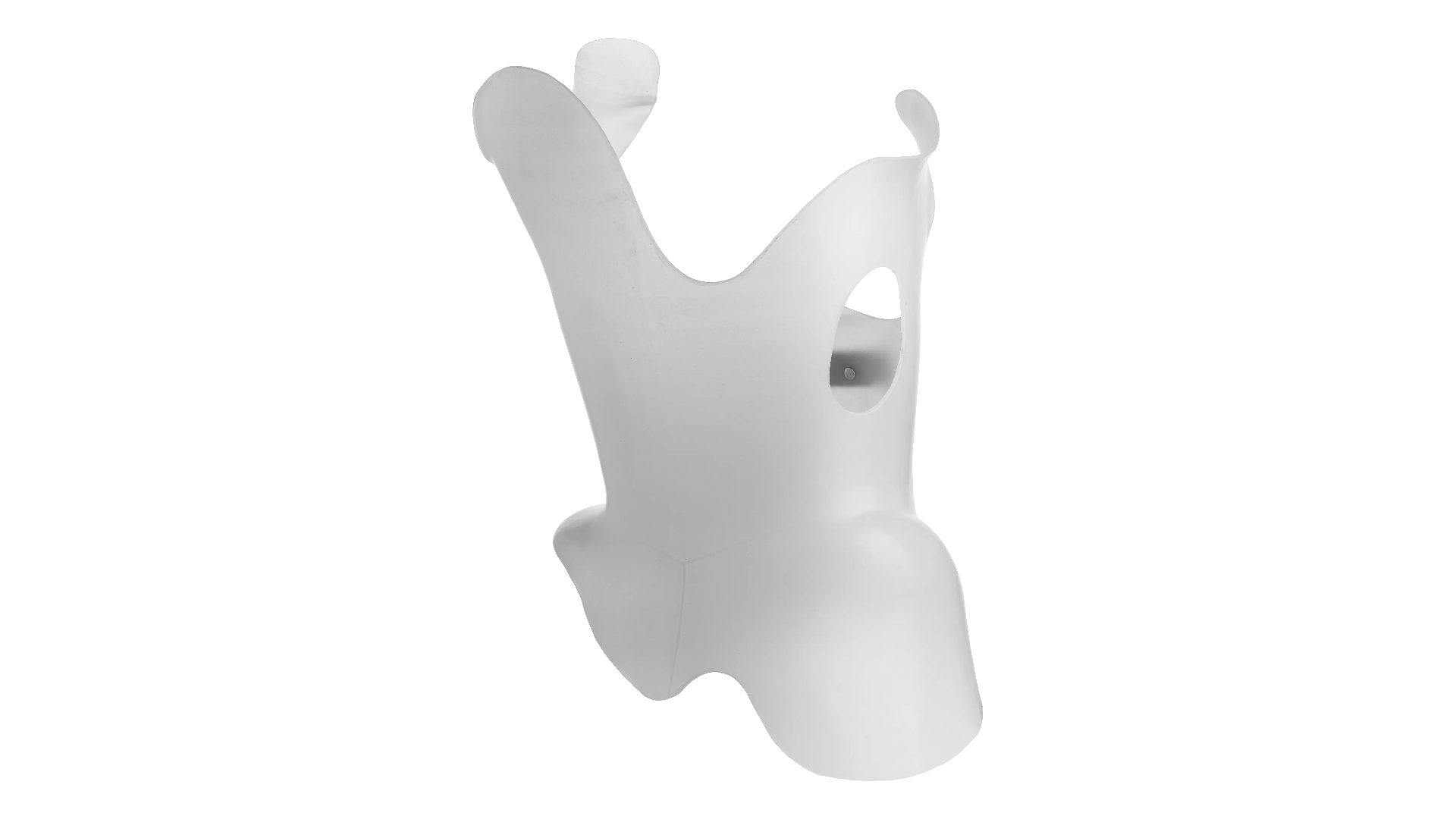
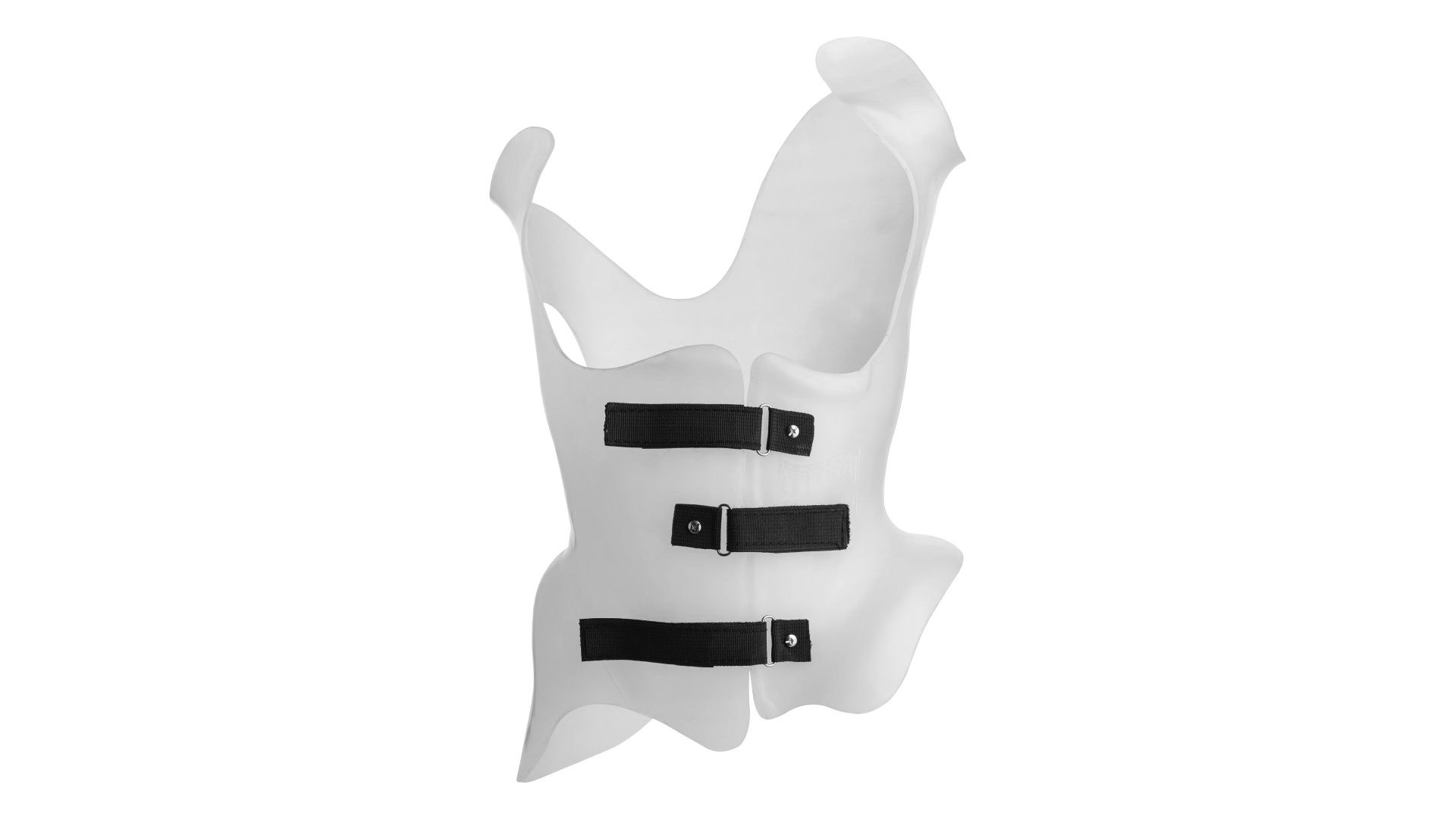
A spinal brace, or spinal orthosis, is a custom-fitted device worn around the trunk. It applies controlled pressure at specific points on the spine and ribcage to influence posture and spinal alignment.
It is not a one-size-fits-all device. The design, fit, and function of a spinal brace depends entirely on the individual: where the curve is, how significant it is, and what the treatment goal is.
At Rise Bionics, we most commonly fit a LSO, TLSO (Lumbosacral orthosis,Thoraco-Lumbo-Sacral Orthosis) for scoliosis correction & support.
But because we design and manufacture every device in-house, we can create and fit whatever a patient needs based on their specific curve and clinical requirements.
For Children and Adolescents: What Bracing Can Achieve
According to the Scoliosis Research Society, bracing is most effective in skeletally immature patients, like children, with curves in the moderate range. Early identification and timely intervention make a real difference to outcomes.
The primary goal in adolescent scoliosis is to prevent the curve from progressing as the spine grows. Research consistently shows that consistent bracing in adolescents with curves between 25 and 40 degrees significantly reduces the risk of the curve worsening to the point where surgery is considered.
In some cases, particularly where the curve is caught early and bracing begins at the right stage of development, the curvature can reduce over time. This is not guaranteed, and it is not the primary goal. But preventing a curve from reaching 50 degrees (the point where surgery is often recommended) is a significant outcome.
The word consistent matters here. Studies show that the benefit of bracing is directly related to how many hours a day it is worn.
A brace worn for 18 hours produces better outcomes than one worn for 8. This is the single biggest controllable factor in treatment success, and it is worth understanding from the start.
For Adults: What Bracing Actually Does
In adults, the spine has finished growing, so a brace cannot change its structure. But it can do several important things.
Reduce pain. Scoliosis in adults can cause significant back pain, particularly as the muscles work harder to compensate for the abnormal curve. A brace provides external support that reduces that effort, which for many patients meaningfully reduces pain.
Improve posture and stability. A well-fitted brace helps maintain a more upright posture and provides trunk stability for daily activities, especially during prolonged standing or physical work.
Slow further progression. While adult scoliosis does not respond to bracing the way adolescent scoliosis does, bracing as part of a broader management plan can help reduce the rate of further curve progression for some patients.
Delay or avoid surgery. For adults who want to avoid surgery, or who are not surgical candidates, bracing alongside physiotherapy and exercise can help maintain quality of life and functional independence for longer.
Managing expectations here is important. If you are an adult being braced for scoliosis and you are hoping your spine will become straight, that is not what the brace is designed to do. The goal is management, and management is a meaningful, worthwhile outcome
A clinical overview of current evidence on bracing outcomes is available through the British Scoliosis Society, including information on what to expect at different stages of treatment.
When Surgery Is Involved
Some scoliosis cases need surgery, especially when the curve is severe or getting worse quickly. In these cases, a brace may be used before surgery to slow progression, or after surgery to support recovery.
At Rise Bionics, we work closely with doctors and surgeons when a case needs it. Some patients come to us with a surgical plan already in place. Others need only a brace. Every case is different, and we follow what is best for each individual patient.
What the Fitting Process Looks Like
A spinal brace at Rise Bionics starts with a conversation. We begin by understanding your routines, challenges, and goals before anything is designed or made.
From there, your trunk is 3D scanned with submillimeter accuracy. The process is fully digital and plaster-free. Our medical team then digitally modifies the scan to suit your specific measurements and curve pattern. The brace is crafted using CNC machining, 3D printing, and other proprietary methods, and carefully fitted to ensure it supports your posture and movement in everyday life.
After fitting, we continue to provide care, training, and support for the life of the device. For growing patients especially, regular reviews and adjustments are part of the process as the body changes over time.
Book a consultation with our team →
Frequently Asked Questions
My child has been diagnosed with scoliosis. Does he or she need a brace immediately?
Not always. It depends on how curved the spine is, how fast it is changing, and how much growing your child still has to do. Smaller curves are usually monitored first. Bracing is most commonly recommended when the curve is between 25 and 40 degrees in a child who is still growing. An assessment will give you a clear answer for your child's specific situation. Book a consultation →
How many hours a day does a scoliosis brace need to be worn?
For children and teenagers, the evidence points to around 16 to 23 hours a day for the best results. The brace can be taken off for activities like swimming or sport. Your orthotist will help you figure out a routine that works for daily life.
Will my child need surgery if he or she wears a brace?
Bracing significantly lowers the chances of the curve reaching a point where surgery is needed. It does not make surgery impossible, but it does make it much less likely. Regular check-ups during the bracing period help the team keep track of progress and make changes if needed.
Can my child exercise while wearing a brace?
Yes, and exercise is actually an important part of managing scoliosis. For most physical activities, the brace can be removed. Your orthotist will guide you on when to wear it and when it can come off.
What is the difference between a scoliosis brace and a posture corrector?
They are very different. A posture corrector is a general device you can buy off the shelf. A scoliosis brace is a custom made device, designed specifically for your child's curve. One is not a substitute for the other.
Does scoliosis always need treatment?
No. Mild curves that are not getting worse and not causing any pain or discomfort are often just monitored over time. Whether treatment is needed depends on the curve, your child's age, and how fast things are changing. It is always a decision made together with your clinical team.

