


Phantom Limb Pain

After an amputation, many people experience pain, sensation, or feeling in the limb that is no longer there. It can feel like burning, cramping, stabbing, or throbbing.
It can come and go, or it can be constant.
This is called phantom limb pain, and it is real.
It is not imaginary. It is not a sign that something has gone wrong with the surgery.
It is a well-understood neurological response, and it is one of the most common experiences after amputation.
If you are going through it, or caring for someone who is, you are not alone and it does not have to stay this way.
What Is Phantom Limb Pain?
When a limb is amputated, the nerves that connected it to the brain do not simply switch off. The brain still has a map of the body that includes the missing limb, and it continues to send and receive signals along those nerve pathways.
Phantom limb pain happens when those signals get confused. The brain is looking for a limb that is no longer there, and that disconnect can produce real, sometimes intense, pain.
It is different from residual limb pain, which is pain at the site of the amputation itself. Both can occur at the same time, but they are separate experiences with different causes.
Phantom sensations, which are feelings of warmth, tingling, itching, or even the sense that the limb is still in a specific position, are also common and separate from phantom pain. They are generally less distressing and often reduce on their own over time.
How Common Is It?
Very common. According to the Amputee Coalition, up to 80 percent of amputees experience phantom limb pain at some point after amputation.
It is most intense in the early months and tends to reduce over time for most people, though for some it can persist longer.
Knowing this matters. Phantom limb pain is not a sign of a complication or a failed recovery. It is a normal part of the neurological adjustment process after limb loss.
Common Triggers
Phantom limb pain does not always follow a predictable pattern, but there are common triggers that can make it more intense:
- Stress and anxiety. Emotional stress has a direct effect on pain perception. The more anxious or overwhelmed a person feels, the more intense phantom pain can become.
- Changes in weather or temperature. Many amputees notice that cold weather or changes in pressure affect phantom sensations.
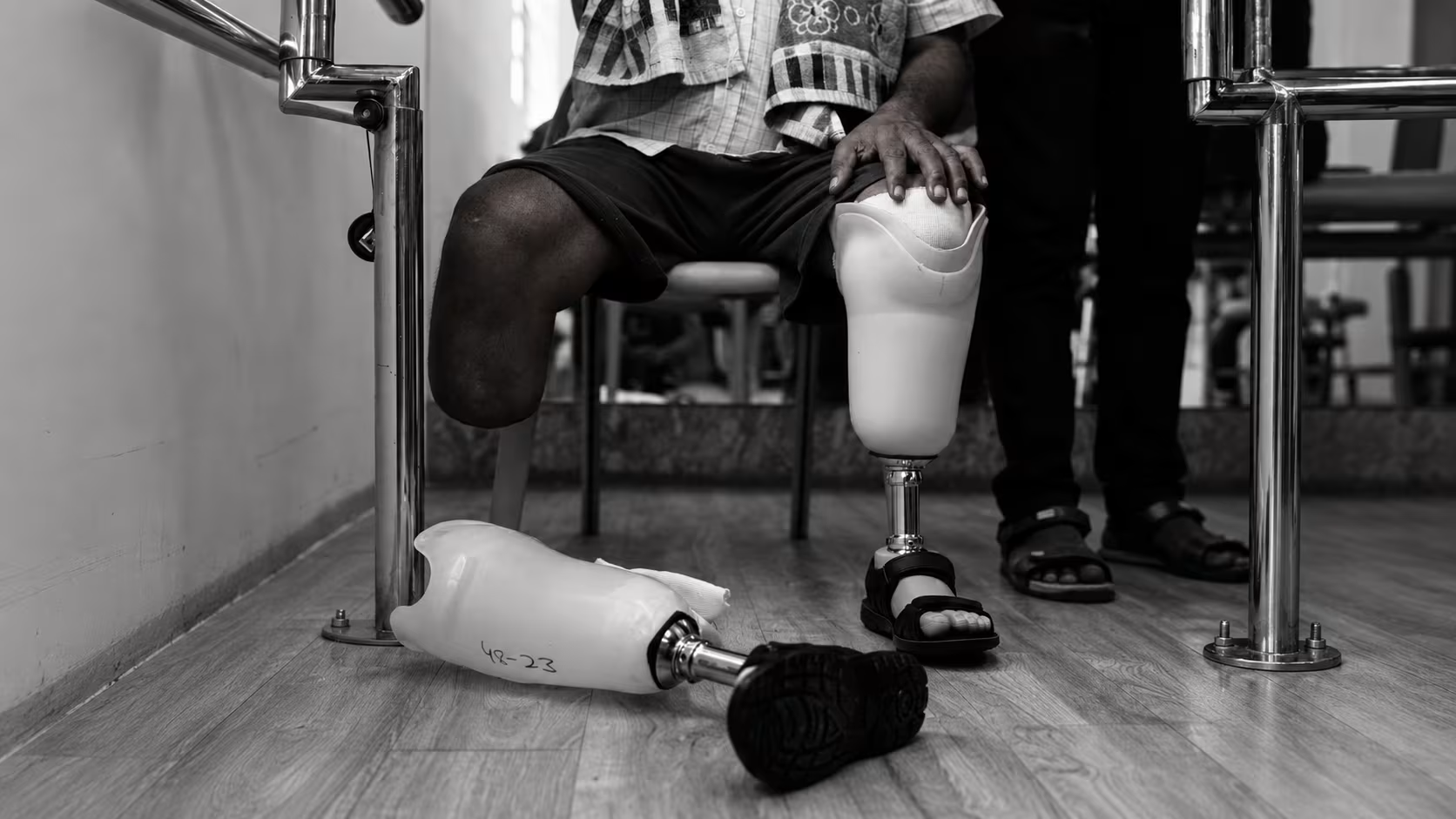
- Pressure on the residual limb. A poorly fitted prosthesis, an uncomfortable position, or pressure on the stump can aggravate phantom pain.
- Fatigue. Being tired lowers the body's ability to manage pain signals.
- Inactivity. Prolonged rest without movement can intensify phantom pain for some people.
Understanding your own triggers is one of the most useful things you can do in the early months.
Keeping a simple note of when pain peaks and what was happening beforehand can help your prosthetist guide you more effectively.
What Helps
There is no single approach that works for everyone. Managing phantom limb pain is usually a combination of things, tried over time, to find what works for a specific person.
Early movement and weight-bearing
Getting the body moving early after amputation, through a temporary prosthesis or guided rehabilitation exercises, sends physical signals to the nervous system.
This can help the brain begin to adjust to the new body map and reduce the intensity of phantom pain over time.
Mirror therapy
Mirror therapy involves placing a mirror alongside the residual limb so the reflection creates the visual impression of the missing limb.
Moving the intact limb while watching the reflection can help the brain process the absence of the other limb and reduce pain signals.
Graded motor imagery
Graded motor imagery is a structured programme that works through three stages: recognising left and right limbs from images, imagining movement without moving, and then using mirror therapy.
It is designed to gradually retrain the brain's response to the missing limb. A physiotherapist or occupational therapist can guide this process.
Staying active
General physical activity, within safe limits for the stage of recovery, helps regulate the nervous system and can reduce the frequency and intensity of phantom pain. Even gentle movement matters.
Managing stress
Since stress directly affects pain levels, anything that helps with emotional regulation can also help with phantom pain. This might mean breathing exercises, talking to someone, or simply maintaining routines that feel normal and grounding.
Medical management
For some people, phantom limb pain is severe enough to need medical support. Your doctor can advice on medication options that target nerve pain specifically.
This is always worth raising if pain is significantly affecting sleep, mood, or daily function. Do not wait it out in silence.
A detailed overview of current approaches to phantom limb pain management is available through the NHS, including information on when to seek medical support.
For Caregivers: How to Help
If you are caring for someone experiencing phantom limb pain, the most important thing to understand is that the pain is real.
Treating it as imaginary, even unintentionally, is isolating for the person going through it.
Some practical ways to support:
- Listen without minimising. "I know it feels real" is more helpful than "but the limb is not there anymore."
- Help with trigger management. Keeping the environment calm, reducing unnecessary stress, and supporting good sleep all help.
- Encourage movement and rehabilitation. Gently supporting the person to stay active and engaged with their rehabilitation programme makes a real difference.
- Encourage them to speak to the clinical team. Phantom limb pain is something the rehabilitation team expects and can help with. There is no need to manage it quietly at home.
When Does It Get Better?
For most people, phantom limb pain reduces significantly in the months following amputation, particularly with active rehabilitation.
It does not disappear overnight, and there will be better and harder days along the way.
For some people it takes longer, and for a small number it becomes a longer-term condition that needs ongoing management.
This does not mean it cannot be managed well. It means the approach may need to be more comprehensive, involving the clinical team, a pain specialist, and possibly psychological support.
Progress is not always linear. A difficult week does not erase the progress that came before it.
The Rise Bionics First Steps Program
First Steps is an online rehab program for recent amputees and their caregivers, designed to support recovery through movement,
wellbeing, and expert guidance.
The program covers information about pain management after amputation, including dealing with phantom limb pain.
Explore the First Steps program →
Frequently Asked Questions
Is phantom limb pain the same as residual limb pain?
No. Residual limb pain is pain at the site of the amputation itself, often related to wound healing, pressure, or nerve endings in the stump. Phantom limb pain is felt in the limb that is no longer there. Both can happen at the same time, but they have different causes and are managed differently.
Will phantom limb pain go away on its own?
For many people, yes. It tends to reduce over the first months after amputation, especially with active rehabilitation and movement. For others it takes longer, and for some it becomes a longer-term experience that needs ongoing management. Either way, there are effective ways to manage it and you do not have to wait it out alone.
Can children experience phantom limb pain?
Yes. Children who have had amputations can experience phantom limb pain, though it is reported less frequently than in adults. If a child is describing pain or sensation in a missing limb, take it seriously and speak to their clinical team.
Does wearing a prosthesis help with phantom limb pain?
For many amputees, yes. Using a prosthesis, particularly early in recovery, helps the brain receive physical feedback from the area and can reduce the intensity of phantom pain over time. This is one of the reasons early fitting and rehabilitation matter.
Should I tell my doctor about phantom limb pain?
Always. Phantom limb pain is expected and manageable, but only if the team knows about it. Do not assume it is something you simply have to live with. Raise it at your next appointment, or sooner if it is significantly affecting your sleep or daily life

